
Save water in the home
Save water, energy and money by making some small changes to your bathroom and kitchen habits.
Save water to save energy
Heating water accounts for 18% of the average household’s energy bill, so there are savings to made in this area of your home.
Save money on your energy bills by shortening your showers, using your washing machine and dishwasher's eco setting, and waiting for full loads before putting on a wash.
In the bathroom
Showering
Showering makes up 40% of the average household’s daily water usage. While having a longer hot shower is a treat for many of us, it can use a lot of water and energy. A family of four could save around £150 a year if each person spends one minute less in the shower.
You could also try:
- reducing the power of your shower by turning down the flow rate and turning it off to lather up or shave
- hopping straight in instead of waiting for your shower to warm up – research has shown having both warm and cold showers can have health benefits
- collect the water while you wait for it to run hot – this can then be used for watering plants or flushing the toilet.
Bathing
On average, a bath uses 80 litres of water. By lowering the level of your normal bath by a couple of centimetres, you could save around five litres.
If you have young children, you’ll use less water and energy if they share bath water, rather than each of them taking a short shower.
Your bath water can then be reused in the garden or on houseplants afterwards.
Toilets
Around 30% of the water used in the home is for flushing the toilet. Only flush when you need to – each saved flush could save around five litres of water.
10% of homes have a leaking toilet, so you should regularly check yours for leaks. Learn how to spot a leaking toilet.
A leaky loo could be wasting 400 litres of water per day, which is about the same as having two extra people living in your home. It could also increase your water bills by up to £400 per year.
Taps
A running tap can use up to nine litres of water a minute. Turn your tap off when brushing your teeth, washing or shaving.
You should also check for leaking taps – even the slowest of drips they could cost you up to £100 a year. If you have a leaking tap, contact a plumber to fix it.
In the kitchen
Dishwashing
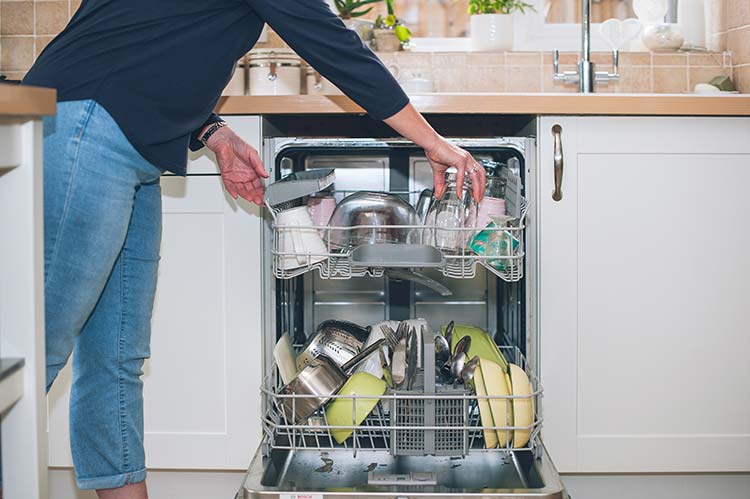
A water-efficient dishwasher uses less water than cleaning your dirty dishes by hand. Some newer models use less than 12 litres per cycle.
If you only have a washing-up bowl, fill it up rather than washing dishes under a running tap and reuse the water on your plants.
Washing clothes
While a standard washing machine uses around 50 litres per wash, you can save water and energy by using your machine’s eco setting.
We also recommend waiting for a full load before putting a wash on to reduce the number of washes you have to do.
By cutting out two loads a week, you could save £50 a year on water and energy bills.
Food preparation
Instead of filling your kettle all the way to the top or using a full saucepan of water, only use the amount you need.
You could also wash your vegetables in a bowl and then reuse the water on your plants. Additionally, after boiling or steaming vegetables, try reusing the water in a stock, gravy or soup.